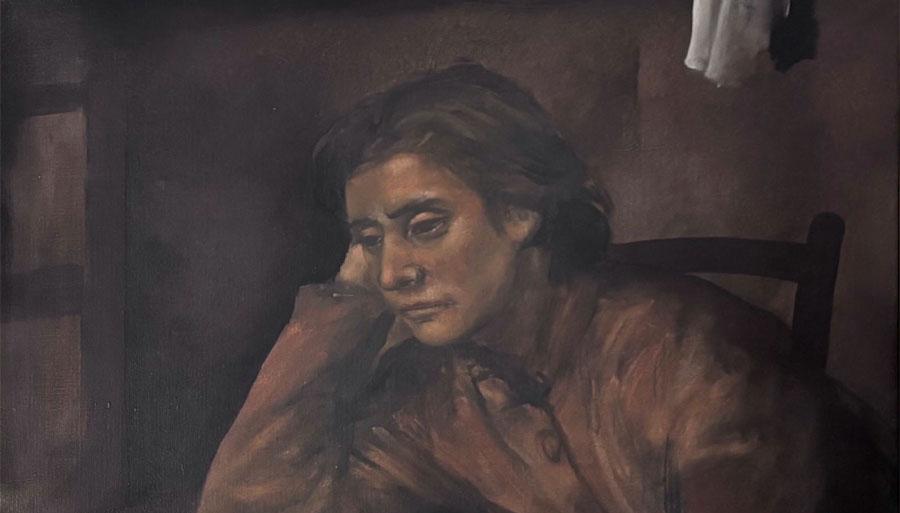
Antoni Tàpies: The human trace and friendship behind "Retrat" (1952)
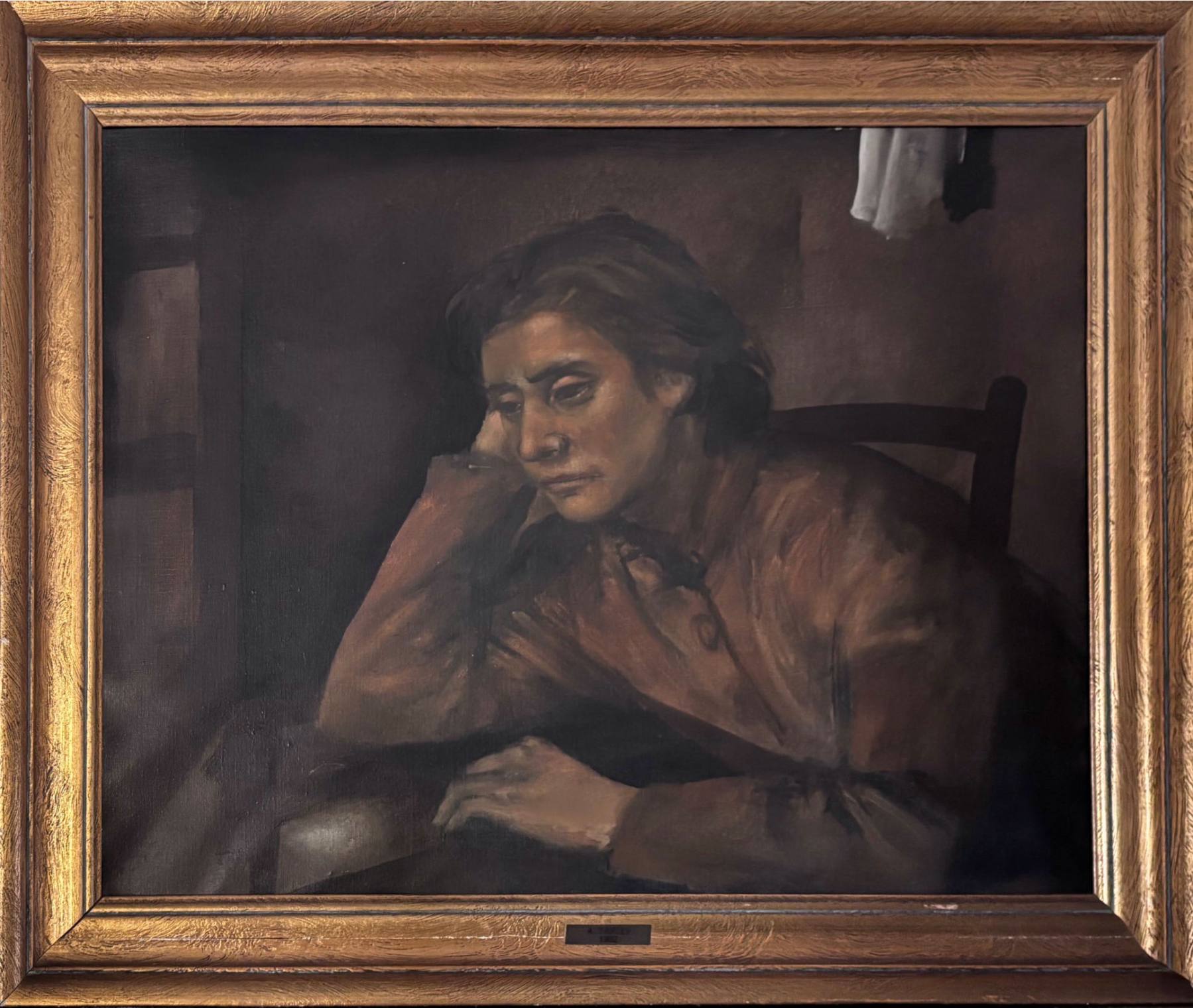
Tàpies Pintura figurativa Subastas de arte onlineWithin the Antoni Tàpies catalog, there are works that shine not only for their technical execution but also for the intimate history they guard within their brushstrokes. Today we analyze an exceptional piece from his figurative stage: "Retrat" (1952), an oil on canvas measuring 72 x 60 cm that immerses us in the intellectual effervescence of 1950s Barcelona.
A work born between the wings and the avant-garde
This portrait is not a simple academic representation; it is the testimony of an era of interdisciplinary collaboration. The woman captured in this introspective atmosphere is the actress Josefa Miralles.
The work was created while Miralles was performing a role in Joan Brossa's play titled "Esquerdes, parracs i enderrocs esberlant la figura" (Cracks, rags and rubble shattering the figure). Josefa Miralles, an aspiring actress at the time and castmate of the renowned Mercedes de la Aldea, was part of the innermost circle of both the painter and the poet.
In those years, the connection between Tàpies and Brossa (founders of Dau al Set) was absolute. This painting reflects that symbiosis: the painter's gaze upon the actress who gave voice to the poet's words.
A wedding gift: Art as a personal bond
Beyond its museum value, this piece carries a deep emotional weight. Tàpies, Brossa, and Josefa Miralles shared a genuine and close friendship. As proof of this affection, Antoni Tàpies gave this painting to Mrs. Miralles on her wedding day.
This origin, coming directly from the artist's hands to his model and friend, grants the work an unbeatable provenance (pedigree), highly prized in the art market, as it guarantees not only its authenticity but also its place in the genius's personal biography.
Expert analysis: The figurative Tàpies
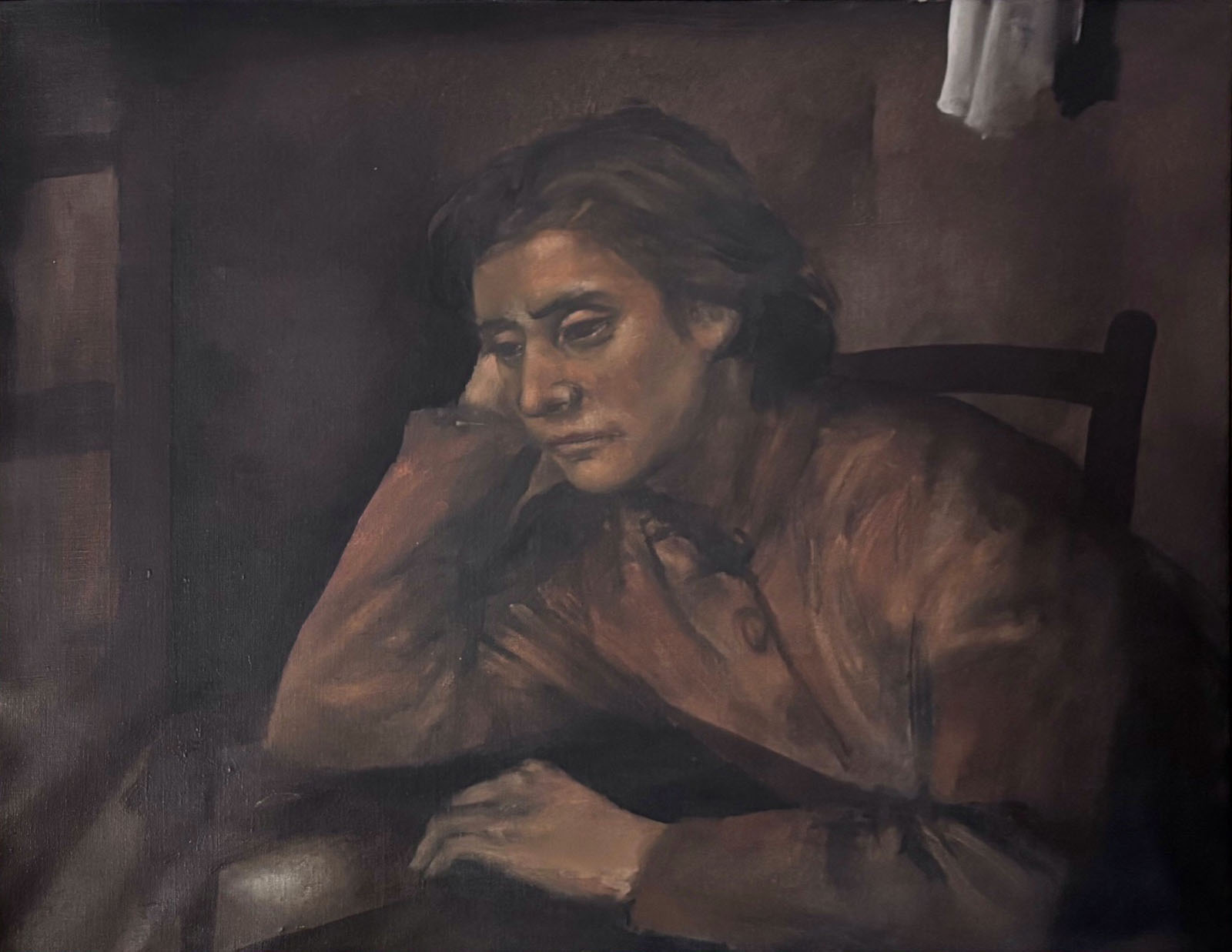
Although the world knows Tàpies for his later matter informalism, this 1952 "Retrat" shows us an artist who already mastered the psychology of the character. The palette of ochre and earth tones, the dim lighting, and Miralles' melancholic attitude —with her face resting on her hand— evoke a modernity that draws from tradition but already points toward existentialism.
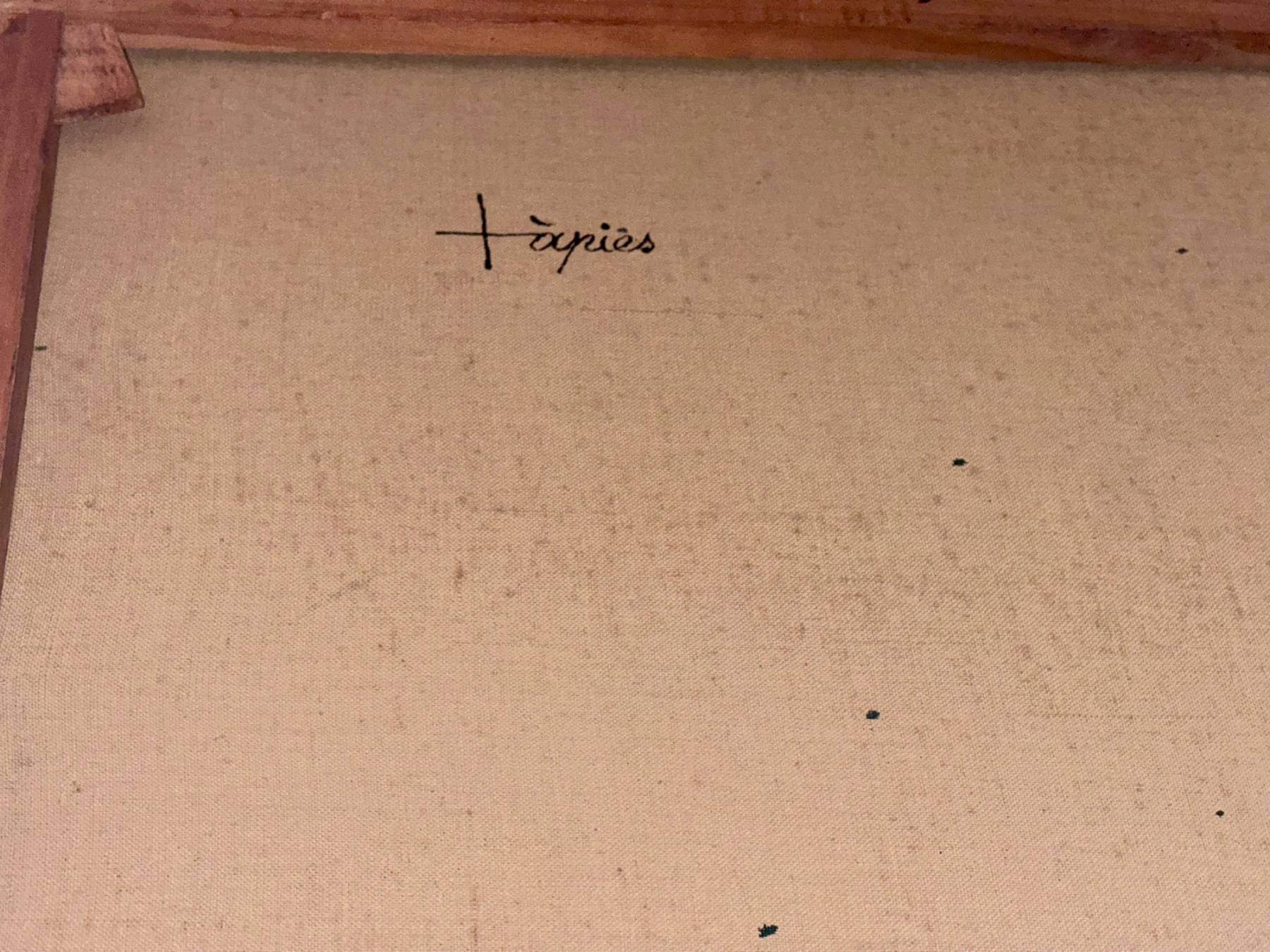
The work presents a notable sculptural force. The fact that it is signed on the back allows the frontal composition to maintain all its purity, focusing attention on the actress's distant gaze.
Guarantees and collecting
From a technical and documentary point of view, the piece is irreproachable:
-
It includes the Certificate of Authenticity by Miquel Tàpies (Director of the Fundació Antoni Tàpies in 1993).
-
It is cataloged in the artist's complete works archive under photo number Mas T-7056.
Conclusion
Acquiring this "Retrat" is not just investing in an early Tàpies; it is possessing a piece of the collective memory of the Spanish avant-garde. It is the point where Brossa's theater, Josefa Miralles' presence, and the brush of a Tàpies who, before conquering matter, had already conquered the human soul through portraiture, all intersect.