
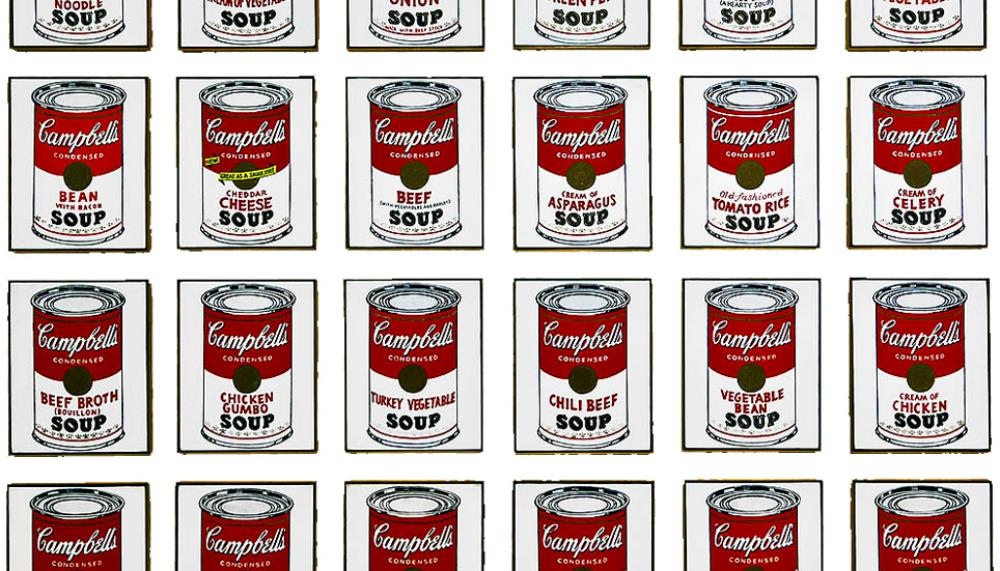
Why did Andy Warhol paint Campbell's soup cans?
Personajes famosos Andy Warhol Pop Art Arte Obra gráficaAndy Warhol was a natural provocateur who, with his peculiar vision and philosophy, managed to blur the boundaries between high culture and mass culture, filling museums and art galleries with the most popular symbols of the United States. One of these icons is the Campbell's tomato soup can, one of the most emblematic works of the pop art movement.
Andy Warhol, a complex artist
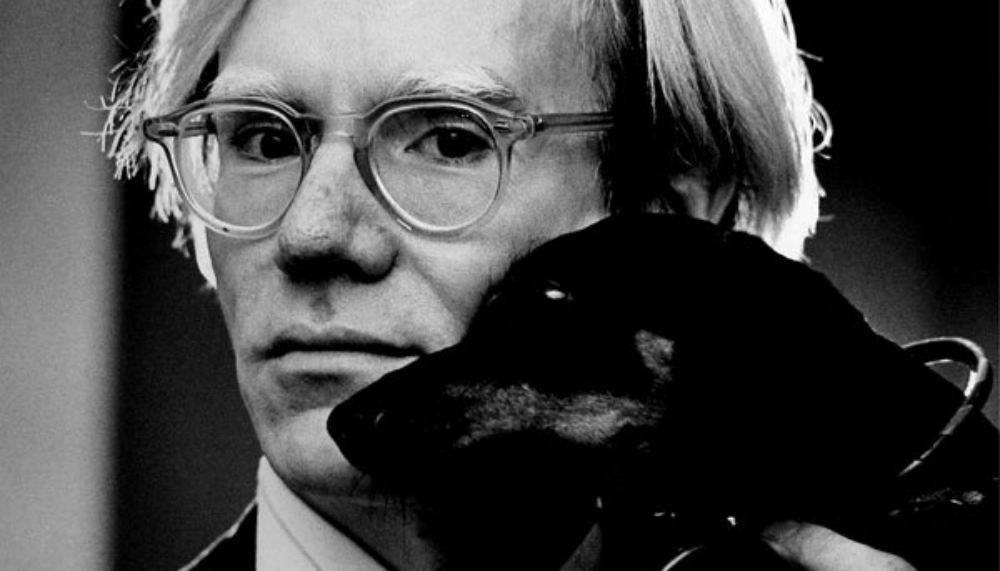
Andy Warhol, born Andrew Warhola, was a controversial figure. He studied advertising and became a successful publicist, also excelling as a film director and nightlife show director, although the trait that made him go down in history was his ability to recognize the social climate of an entire era and capture it in a new philosophy and aesthetic through the plastic arts.
Considered the leading exponent of the pop art movement, Warhol used his skill as an artist and his experience as a publicist to create a proposal that distanced art from the spheres of high culture to merge it with life, confronting abstract expressionism, the predominant movement in the United States at the time, with his affordable figurations.
In the famous Campbell's soup can, we find an example of this resounding Dadaist declaration to dynamite the concept of art.
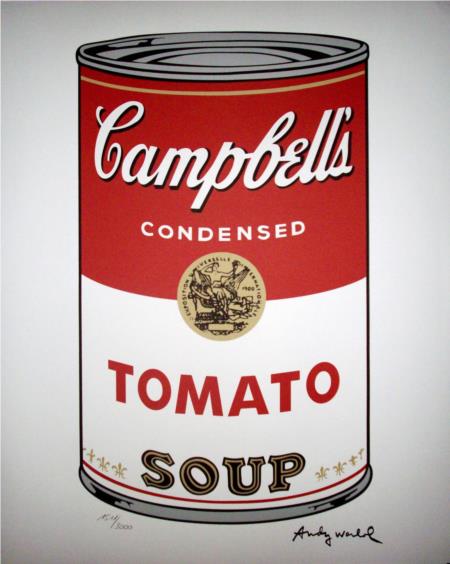
Campbell's Tomato Soup Can (1962)
Andy Warhol turns a most mundane element into the main subject of the work with the aim of demystifying art. Thus, we find the serigraphic reproduction of a can of Campbell's tomato soup, Warhol's favorite, represented in perspective on a neutral background that highlights its outline, preventing other elements from distracting the viewer's gaze from the can, elevated as an epitaph to art or a monument to nothingness.
In this way, the very act of erecting a most ordinary element as the main subject of the artwork reveals the artist's intentions and clearly exemplifies the foundations of the pop art movement: to explore the relationships between art and mass culture -popular culture- by exalting everyday life and banality.
Warhol's works also constitute a protest against institutionalized art, elitist art beyond the reach of the general public, sometimes even revered without any reflection or critical thought.
In addition to the image at the top of this post, there is a wide variety of pictorial versions of the Campbell's soup can. Andy Warhol experimented with various colors, procedures, and sizes, so it is possible to find paintings with this motif in different museums and private collections.
Philosophy and themes in Andy Warhol's work
 |
 |
 |
 |
Trained as an advertiser, Warhol knew how to analyze and immerse himself in the popular culture of American society in the sixties, and he wanted to bring art to all audiences by representing icons drawn from the culture generated by this society in his creations.
Warhol's first works are the well-known Campbell's tomato soups, the creation of which he embarked on after the success obtained by pop art precursors like Robert Rauschenberg or Jasper Johns, who had experimented with the representation of mundane objects and communicative symbols.
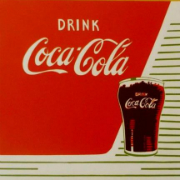
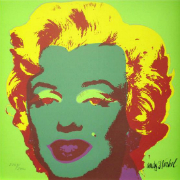
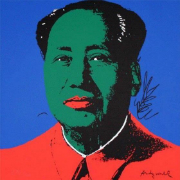
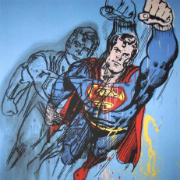
The most recurrent themes in Andy Warhol's artistic production are commercial products, such as the aforementioned Campbell's soup or other items like the emblematic Coca-Cola. Also noteworthy are his series dedicated to famous people, among which we find portraits of entertainment stars like Marilyn Monroe or even ideological leaders like Mao Tse Tung or Che Guevara. Warhol also dedicated graphic work to fictional characters like Mickey Mouse or Superman, true icons of 20th-century American culture.
 Serial art: serigraphy as a procedure
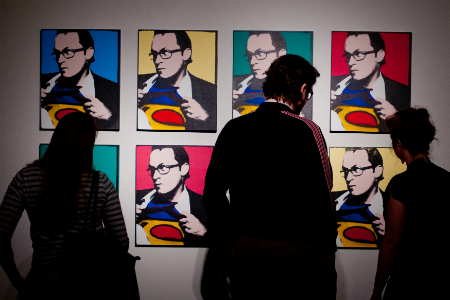
Another facet of pop art is its mass character. Although Warhol made his first paintings with a brush, from the 1960s onwards, when he began to create large-format works, he opted almost entirely for serigraphy, considering that this procedure offered greater creative potential by allowing photographs of the desired size to be printed on canvases and any other type of support.
In fact, he also frequently used this technique to reproduce series of almost identical images with chromatic variations, some of his most celebrated compositions.
Furthermore, serigraphy allowed Andy Warhol to apply the principles of mass culture to his artistic procedure, further grounding the ultimate goal of his artistic production: to dynamite the concept of a unique, exclusive, reserved work of art.
The artist himself declared that he considered himself "a machine," someone who made industrial art products capable of satisfying the public's artistic needs. Warhol called his studio The Factory, thus emphasizing this idea of serial art of which he is the foremost representative.
Today, after his death, Andy Warhol's pop art continues to fascinate, and he is one of the favorite artists among gallery owners and art collectors. If you are interested in buying graphic work by Andy Warhol, you can find many of the serigraphs mentioned in this post in our online art auctions. Click here to register on SubastaReal.es and discover all the lots of Warhol's graphic work you can bid on.







Su obra fascinante, con un toque de genialidad para su época, edmiro esa capacidad, esa visión, creatividad casi sin límites, esa sensibilidad para tocar el "corazón" de las personas. Que triste para mi que la fama, la groria el éxito. Lo convirtieron en un ser como persona detestable, cruel, lleno desequilibrios emocionales, con arrogancia desmedida, una vidad promiscua, y que no le importaban las personas solo, el, vanidoso, egolatra. Que contrariedad, ni modo, es una manifestación de la naturaleza humana. Saludos mi correo es antsico07@prodigy.net.mx
Esctibir un articulo sobre Andy Warthol y no hacer mencion de su mas valioso sujeto, es como habalr de Cevantes y no mencionar El Qujote. Warhol hizo 10,000 obras, entre ellas 39 serigrafias de Elvis Presley. Tan solo 10 de esas 39 han generado en sunastas en Chrsitie's y Sotheby's, o en ventas privadas, el mayor botin proveniente de cualquera de sus sujetos. Hablamos de US$337,800,000 a saber i) "Doble Elvis" US$0.7m ii) "Elvis Sopa Campbell" US$1.4m,. luego US2,8m,'' iii) "Triple Elvis",USD 1,8 iv) "Elvis Rojo" US$2.9m v) "Elvis sencillo" US$3.5m, vi) "Elvis I and II", US$15,7m, vii) "Doble Elvis", US$37.1m, luego US$37m, viii) Doble Elvis US$53m. ix) "Triple Elvis" US$81.9m y x) "Ocho Elvises" US$100m.
Las sopas Campbell de Andy Warhol son un icónico ejemplo del arte pop de la década de 1960. Warhol creó una serie de pinturas que representaban las icónicas latas de sopa, que habían sido un elemento básico en los hogares estadounidenses durante décadas. La serie de Warhol elevó la humilde lata de sopa a la categoría de arte, desafiando la noción tradicional de lo que podía ser considerado como tal. Las sopas Campbell de Warhol se han convertido en un símbolo duradero del movimiento pop art, y continúan siendo apreciadas por su audacia, simplicidad y su capacidad para cuestionar nuestra percepción de la cultura popular y el arte.
Es un tipo de arte poco convencional pero de hay deriva su importancia cultural
Los garabatos que se pintan en los muros ajenos, son las firmas sobre algo generalmente descuidado, gris, feo o desarmónico, pero también sobre lo bien cuidado en dónde la desarmonía de la firma le otorga lo que le falta y lo hace perfecto. En ambos casos los defectos quedan impresos para dar noticias y testimonio de su condición. Es un símbolo y recuerdo de lo que permea a todos en el intento de comunicación bajo una obediencia que interfiere en la claridad del propósito. El ímpetu natural a la desobediencia se convierte en transgresión, no a la ficción de ley, saber o creencia que se impone desde una autoridad y dueño, sino a su propia consciencia. Para el huérfano de consciencia la ficción es la única realidad que lo convierte en objeto de ficción, condición para que sea observado y prestada la atención. El desfogue de la represión va acompañada del saborear su poder con goce adictivo, lo que convierte a la víctima en victimario en diferentes graduaciones entre el dolor y placer, repetición representada en un teatro. La transgresión o la agresión en trance, se convierte en un lenguaje del cual se sedimentan palabras extrañas y específicas de la locura, dónde se distorsionan los significados, propósitos y sentidos de la justicia, el amor, el respeto y la libertad que desde la carencia, emergen lógicamente el castigo, la represión, la tolerancia y la obediencia para indicar la condición afectada a la supervivencia, en dónde actúa la lucha, la parálisis y la huida, ocultando lo esencial y trascendente en el baúl de los misterios. ¿Qué se ama y que se desprecia? Por lo tanto, una ficción de ley, saber o creencia, que puede ser una palabra, sueño, ideología y sistema, son circuitos cerrados en dónde los inicios y fines se encuentran prestablecidos. Las variantes son anecdóticas que pasan a llenar el saco de las estadísticas. Cada creyente recreará una nueva versión a su medida para formar parte del circuito lógico y retroalimentarlo. Por eso, hay que tener presente la mecánica clásica de los automatismos que forman lo aparente bajo una lógica binaria plasmada en planos bidimensionales. Los ojos y oídos pueden ser muy fácilmente engañados por la belleza y atraidos en el horror. El que es atrapado en la mecánica, no sólo puede ser atrapado entre cuatro paredes, sino hasta dentro de un diamante. El amo y el esclavo son extremos de una misma vara, uno de ellos cree ser la única realidad. El amo utiliza las virtudes y defectos como objetos de ficción dentro de un tablero de juego. Mientras en el esclavo, ese bien y mal se encuentran en pugna eterna y equilibrada. Ambos constituyen una normalidad monolítica en dónde los defectos deben perdurar como virtudes para señalar la existencia del opuesto, por lo cual las virtudes quedan reprimidas, sin aprender cual es el error y el defecto que lo genera. Los carceleros y al mismo tiempo, guardianes, son claros en el amo, reflejado en la sofisticación de su herramienta tecnológica virtual y física en la que depositan ilusoriamente toda su responsabilidad, mientras en el esclavo es un Dios, idea, entelequia perfecta a la que nunca puede superar por su imperfección eterna, mientras se conserve como verdad en la memoria de las apariencias, que es atemporal. El resultado es el transhumanismo, concretado en un Dios binario, eléctrico y magnético de bolsillo y a la medida de cada usuario. El creyente nunca elige a un presidente, ni al rey o Papa, tampoco al pastor o gerente, juez o general, y menos al dueño de la tierra o empresa en dónde trabaja. El contrato es entre los que saben y mandan con los que ignoran y obedecen. Cuando los reinos se asocian se les llama imperio, una sociedad anónima. El teatro de realidad establecido es constituido por ficciones fantásticas, legales y técnicas. El adiestramiento se realiza con premios y castigos, pero el verdadero premio es no ser castigado, por lo cual solo existe libertad condicional con permisos con bajo tributos, y es llamado Derecho. Por eso el arte expone lo aprendido con la virtud, o el producto de su defecto en dónde la virtud se encuentra en segundo plano. Al entrar al cuento de Caperucita roja inconscientemente, el cliente no irá a dónde quiera, sino que es obligado a transitar por dónde está programado ir. Mientras entiendes el cuento, están pasando cosas... La normalidad. ¿Quién fue primero, el engañador o el engañado? Todo es arte, y el arte es un juego. Hay que aprender a jugar. Por lo cual cada palabra tiene su sitio.