
The Soul of Guernica: A Look at Picasso's 42 Sketches
Picasso DibujoAs an art expert, one of the most fascinating and well-documented creative processes of the 20th century is, without a doubt, the gestation of Pablo Picasso's "Guernica." Beyond the monumental final work, which we all know and which continues to overwhelm us with its raw denunciation of barbarism, there exists a universe of sketches and preparatory studies that allows us to peer into the artist's mind in the midst of a creative whirlwind. Today, we delve into the exclusive collection of 42 of these sketches, a facsimile edition that constitutes a treasure for any art lover and a historical document of incalculable value.

The bombing of the Basque town of Guernica on April 26, 1937, was the catalyst that spurred Picasso to create his most iconic work. In just a month and a half, between May and early June of that year, the artist from Malaga engaged in a feverish work process in his Parisian studio on the Rue des Grands-Augustins. The result of this intense activity is the approximately 45 sketches (some sources mention up to 66) that he made on paper—a torrent of ideas, tests, and second thoughts that gradually shaped the final composition.
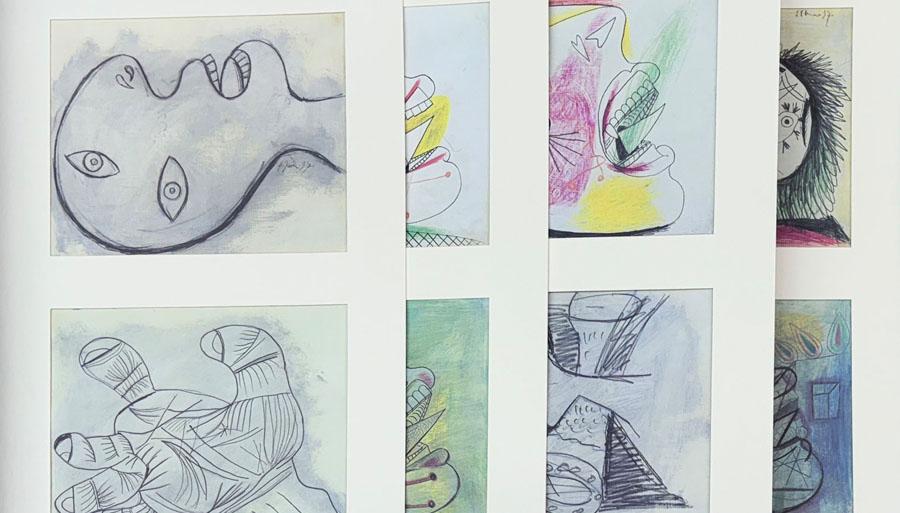
The collection of 42 of these sketches, published in a high-quality facsimile format, offers us a unique opportunity to follow, step by step, the evolution of Picasso's thinking. In these pencil and charcoal drawings, we see how the artist explores and defines the figures that would become universal symbols of pain and tragedy:
-
The Bull: A symbol of brutality and darkness, but also, for some, of Spain itself. In the sketches, Picasso tries out different postures and expressions, seeking the menacing stillness that would finally characterize it.
-
The Horse: The quintessential innocent victim. Its agonized neighs are almost audible in the energetic and desperate strokes of the sketches. We see how its figure becomes stylized and fragmented, a clear example of Picassian cubism.
-
The Mother with the Dead Child: A secular and heart-wrenching Pietà. The sketches of this group are overwhelmingly expressive. Picasso focuses on the mother's silent scream, a cry that resonates throughout history.
-
The Woman with the Lamp: A beam of light amidst the darkness. This figure, who bursts onto the scene from a window, is one of those that evolves the most throughout the sketches.
-
The Dead Warrior: In the first sketches, the figure of the fallen soldier is more evident. Over time, Picasso deconstructs him, leaving only an arm brandishing a broken sword from which a flower grows—a fragile symbol of hope.
What makes this collection of sketches so valuable is not just its intrinsic quality, but the narrative it constructs. By observing them in sequence, we witness the artist's decision-making process. We see how he introduces and discards elements, how he tries different compositions, and how, finally, he opts for the stunning palette of whites, blacks, and grays that gives the final work its timeless and universal character. It is fascinating to discover, for example, that in some of the early sketches Picasso experimented with color, only to abandon it later in search of greater dramatic impact.

This facsimile edition, which has been the subject of auctions and has become a highly sought-after collector's item, is not a mere reproduction. It is a tangible testament to Picasso's creative genius and a privileged window into the intimate history of one of the most important works of art of all time. For any scholar or admirer of Picasso, having access to these 42 "thoughts" of the artist is a revealing and exciting experience, an opportunity to deeply understand the soul of "Guernica."





Where can I find this book online ?