Interview with Esther Girbau: Matter as Language and the Beauty of Imperfect
Pintura contemporánea Subastas de arte online Esther GirbauWe delve into the artistic universe of Esther Girbau, a creator who has transcended the limits of the conventional canvas to engage in an intimate dialogue with matter and time. Her work, profoundly organic and with an unavoidable physical presence, is a manifesto of sustainability and connection with nature.
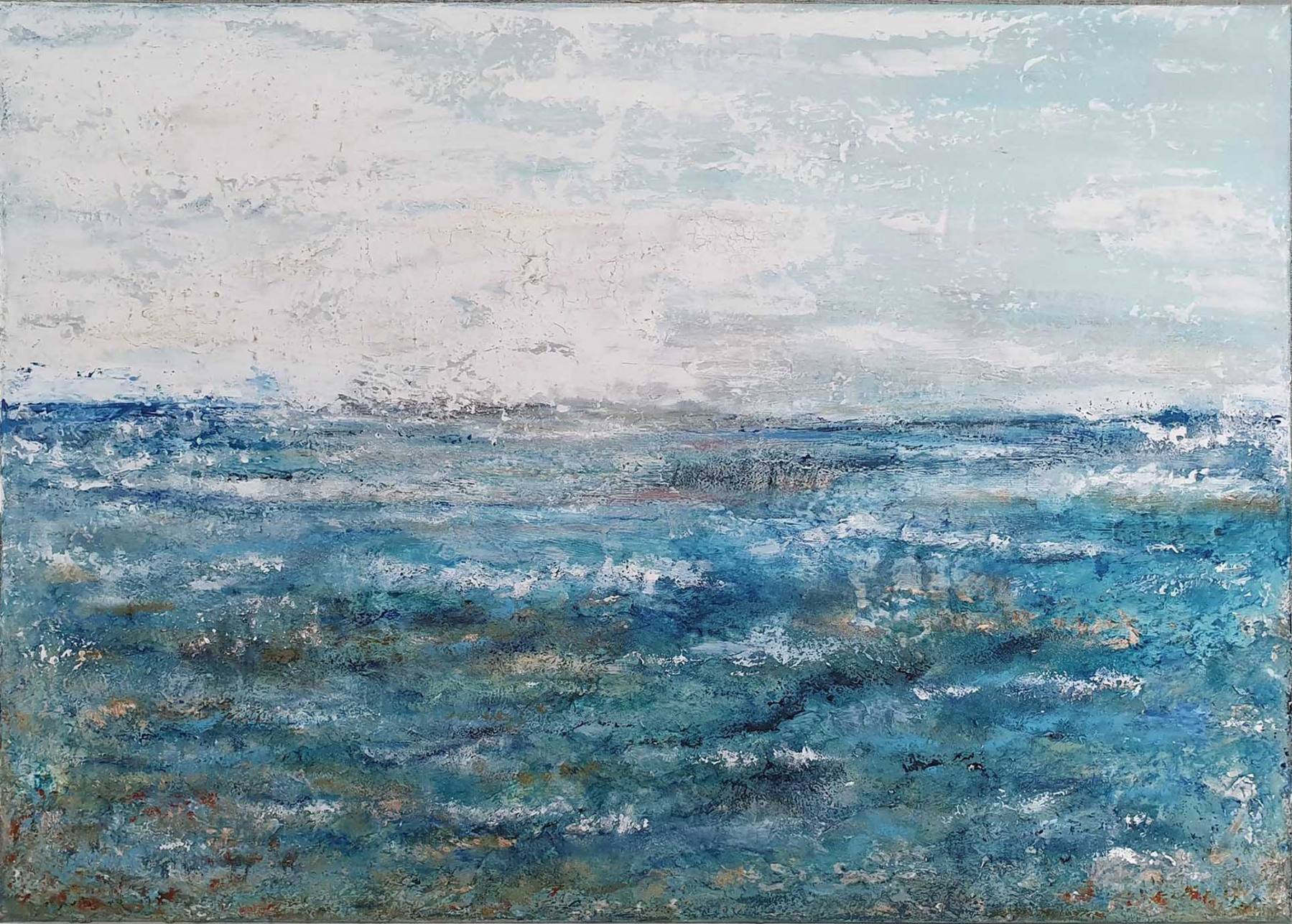
From her light beginnings to her most recent pieces, which she conceives as "almost tectonic" surfaces, Girbau has forged her own language through the use of recycled materials, the artisanal elaboration of her own mineral pigments, and the mastery of techniques such as fresco and natural oxides. All of this is under the powerful influence of the Japanese philosophy of Wabi Sabi, which celebrates the beauty of the imperfect, the eroded, and the flow of natural processes.
Throughout this conversation, Esther Girbau reveals how the unpredictability of the material dictates the form of her creations, the essence of her inspiration, and the fundamental role she gives the viewer to find their own emotion in the dialogue with the work.
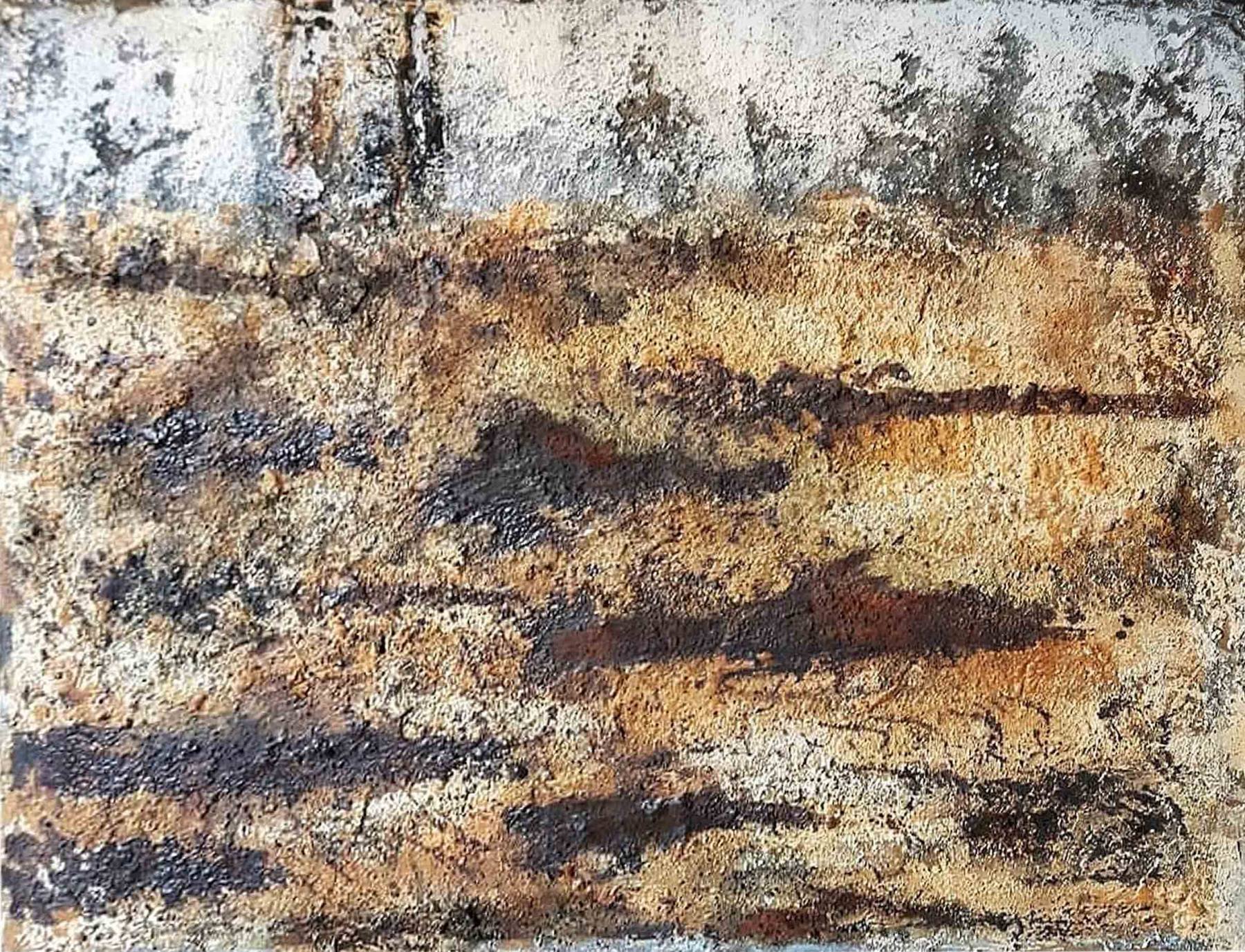
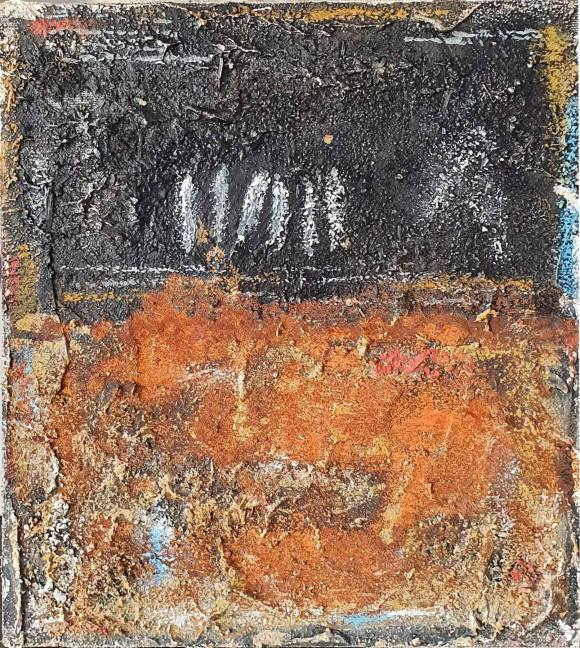
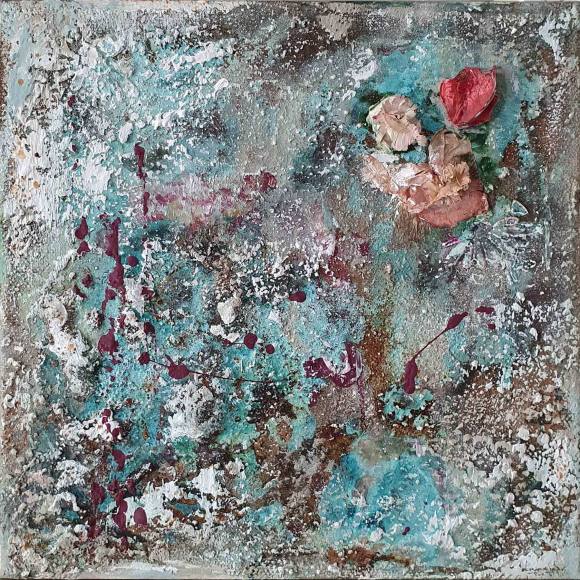
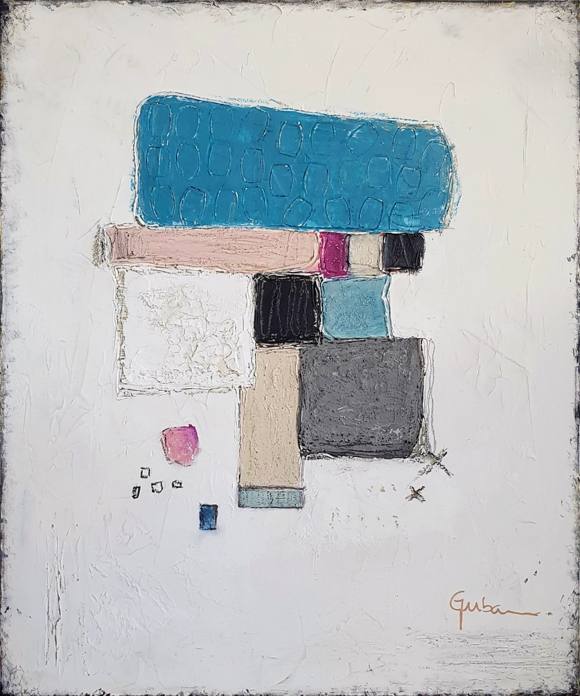
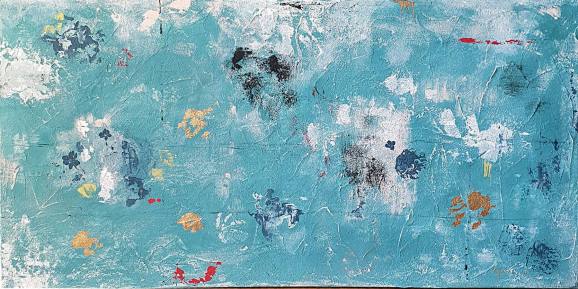
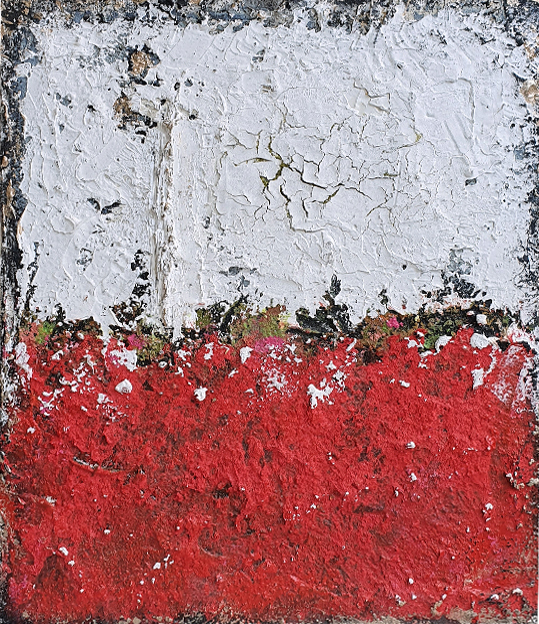
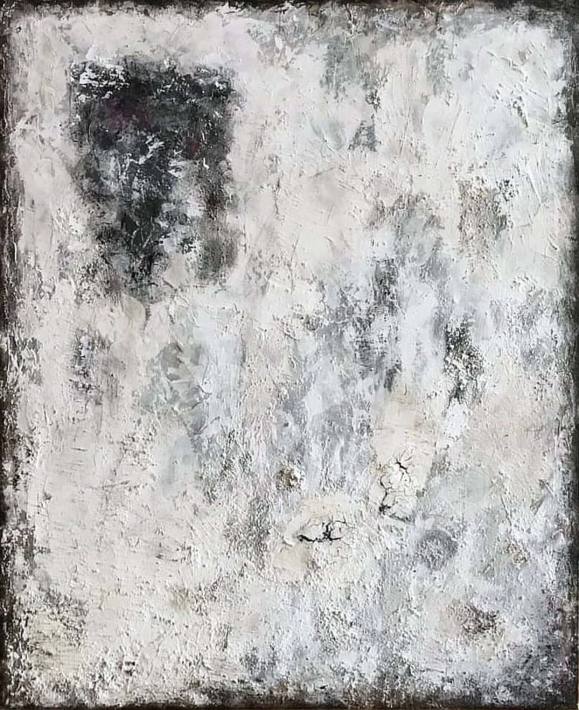
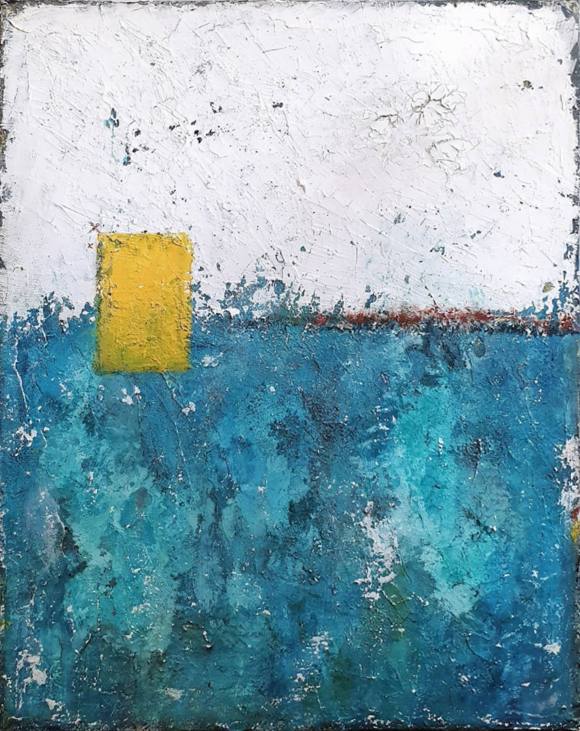
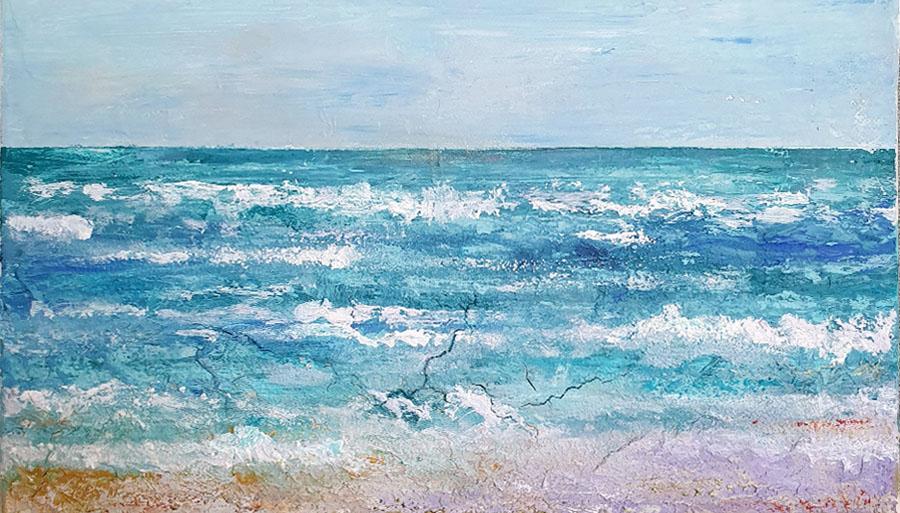
Subasta Real. How would you describe the evolution of your work from your first works to your most recent pieces? Esther Girbau. My work has evolved in a very organic way. I started working with simple and conventional materials —watercolors, acrylics, paper, or untreated canvases— with a lighter and more contained approach. Over time, and heavily influenced by my relationship with nature, I began to incorporate matter, volume, and textures. I discovered that three-dimensionality allowed me to be more expressive and better capture the deep intention of my pieces. That was one of the great milestones of my career: understanding that the canvas could stop being a simple support and become something almost tectonic, a living surface. Another key evolution was abandoning commercial paints and starting to manufacture my own natural pigments and techniques like fresco. All of this has led to my current work having a more physical, intuitive presence, connected with organic processes, where the material is as prominent as my gesture.
S.R. What elements —themes, materials, or techniques— do you consider fundamental to your artistic language? E.G. There are two essential pillars in my language: matter and sustainability. I work almost exclusively with unconventional and recycled materials: sawdust, sands, stones, cellulose I make myself from newspapers or cardboard, crushed flowers... For me, it is fundamental to use elements that respect the environment, avoid chemicals, and commit to natural processes. The same happens with paint: I create my own mineral pigments by mixing them with lime or applying them on wet plaster to create unpredictable and vibrant frescoes. Another important axis is oxides. Iron or copper offer me completely random tones and behaviors that force me to step out of my comfort zone. The reactive agents I use to oxidize them are also natural: vinegar, lemon, hydrogen peroxide, lactic acid... Finally, a key conceptual element is Wabi Sabi, the Japanese philosophy that values the beauty of the imperfect, the eroded, and the unfinished. The cracks that appear in my works symbolize that duality of light and shadow, yin and yang, that which breaks and transforms.
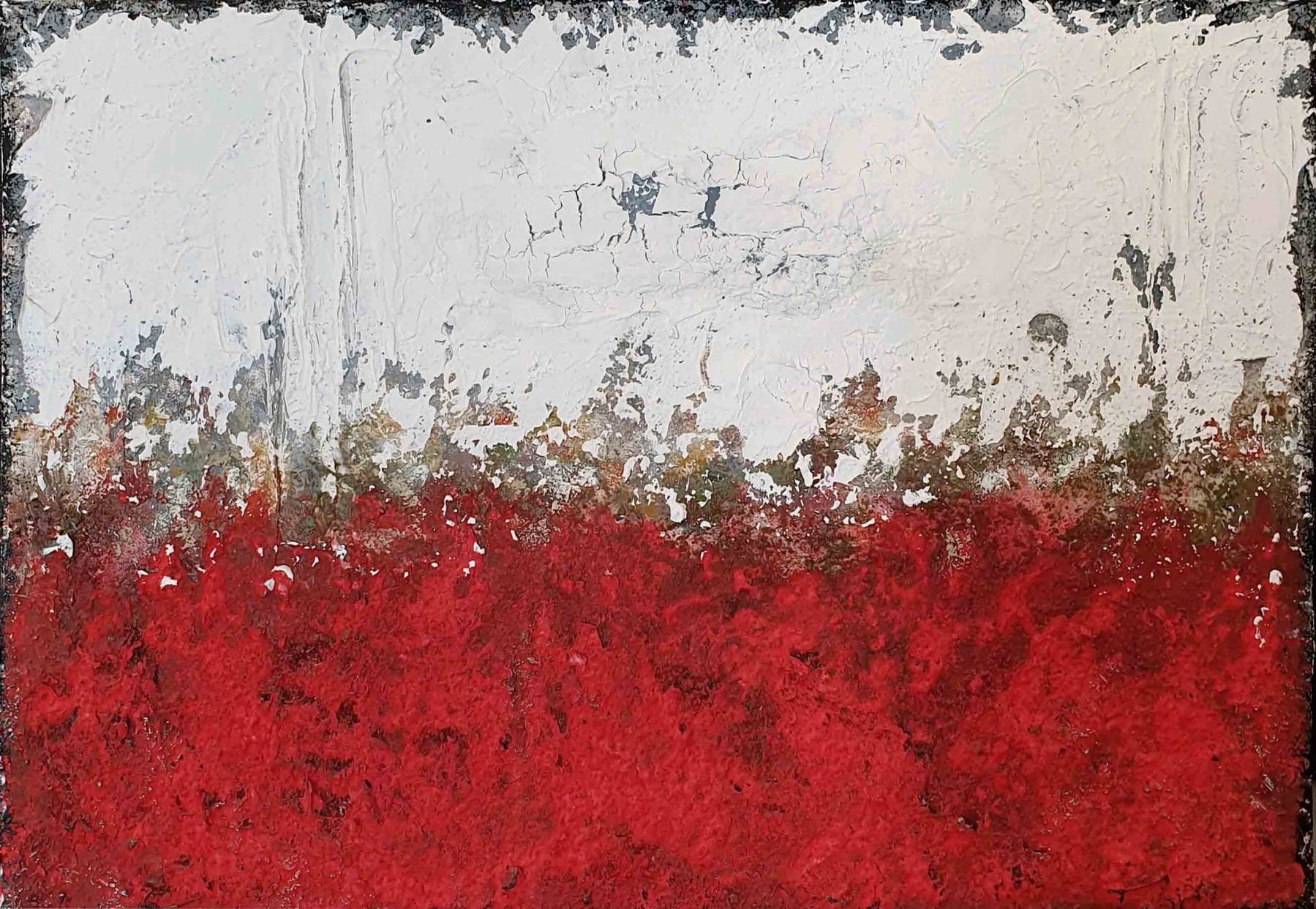
S.R. What role does inspiration play in your creative process, and where do you usually draw nourishment to start a new piece? E.G. I am deeply inspired by nature and the passage of time. My references range from artists like Tàpies, Bosco Sodi, Anselm Kiefer, or Barceló to the aesthetic sensitivity of Wabi Sabi. I also draw nourishment from my travels: I usually collect mineral pigments from different countries. The true inspiration comes from the material itself. Natural processes —oxidation, the drying of plaster, unpredictable textures— oblige me to dialogue with the work instead of controlling it.
S.R. How do you approach the relationship between your work and the public? What would you like the viewer to feel or reflect upon when seeing it? E.G. It is essential for the viewer to enter the work, to discover textures, organic forms, and small details. I don't aim for my pieces to be decorative or to convey a single, closed message; I don't want to condition the audience's emotional experience. I don't sell a concept; I transmit an emotion. I want each person to find their own interpretation.

S.R. What projects are you currently working on, and what challenges or aspirations do they awaken in you? E.G. I am currently continuing to delve into organic works with recycled materials, mineral pigments, and natural oxidation processes. I am interested in continuing to explore the unpredictability of the material. One of my greatest challenges is to continue researching new textures and techniques within Wabi Sabi, expanding this aesthetic where beauty arises from time and imperfection, always through sustainable and environmentally friendly processes.
We thank Esther Girbau for sharing her philosophy and her passionate creative process with us. We wish Esther the best of luck in her future projects and hope that her continuous dialogue with matter and imperfection continues to inspire those who contemplate her work.