
Gala and Dalí: A love as surreal as it is eternal
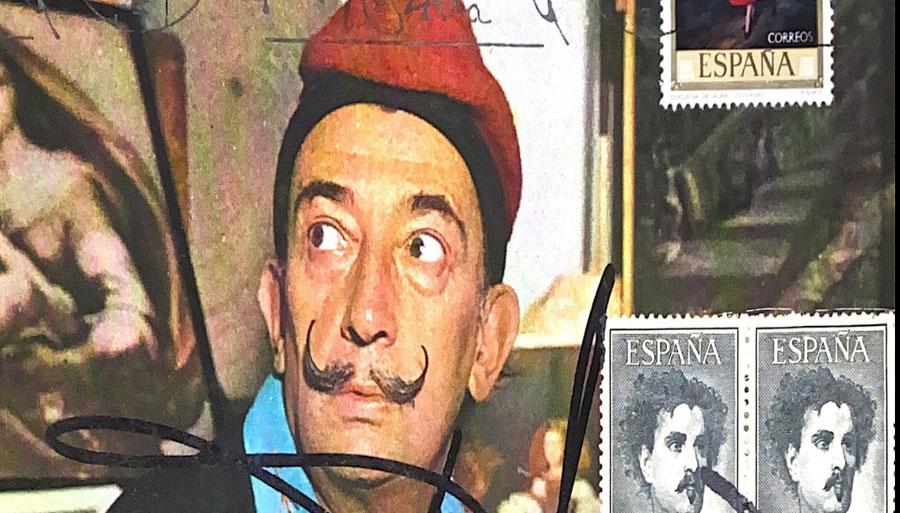
Salvador Dalí Subastas de arte online compra-venta de arteSalvador Dalí, the unmatched genius of surrealism, not only painted impossible dreams and landscapes of the mind on his canvases: he also lived a love story that seemed drawn from a parallel dimension. At the very center of his artistic and vital universe was Gala, his unbreakable muse, his total companion, his eternal obsession. Their relationship was one of the most fascinating, passionate, and unique of the 20th century.
Dalí met Gala —whose real name was Elena Ivanovna Diakonova— in 1929, in Cadaqués, during a visit with surrealist poet Paul Éluard, her then-husband. From the very first encounter, Dalí was spellbound. He described it as a spiritual and carnal thunderbolt that forever upended his world. Despite the scandal it caused within surrealist circles and the initial rejection from his own family, Gala and Dalí began a blazing romance that would defy every social, emotional, and artistic convention.

Gala was not only his muse but also his guide, his manager, his protector, and his personal goddess. Unlike the passive muses of other artists, Gala exercised active power over Dalí’s life and work. She encouraged him to professionalize himself, to build a persona, to negotiate with dealers and gallerists, to profit economically from his art without shame. She was the one who pushed him out of bohemian anonymity to become a global figure: extravagant and commercially savvy. Gala was the mirror in which Dalí saw himself, but also the silent architect of his empire.
On an intimate level, their relationship was equally extraordinary. It was not a conventional love, but an alchemical connection. Dalí, scarred from youth by sexual traumas and deep insecurity, found in Gala a figure that combined passion with authority, love with mystery. For him, Gala was virgin and goddess, mother and lover, angel and demon. She, in turn, moved with determination through the artist’s deliriums, becoming the only person capable of calming his inner chaos.
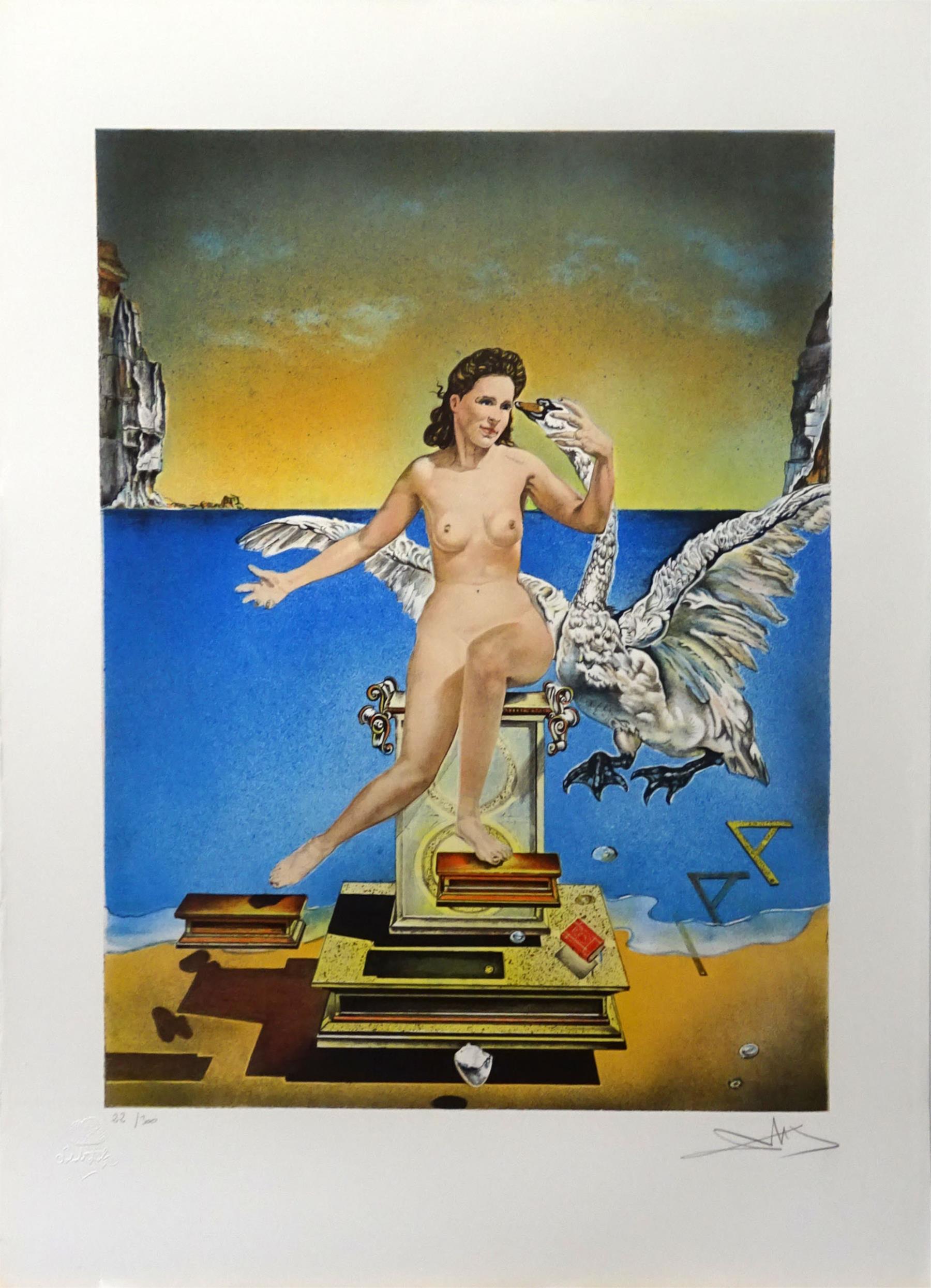
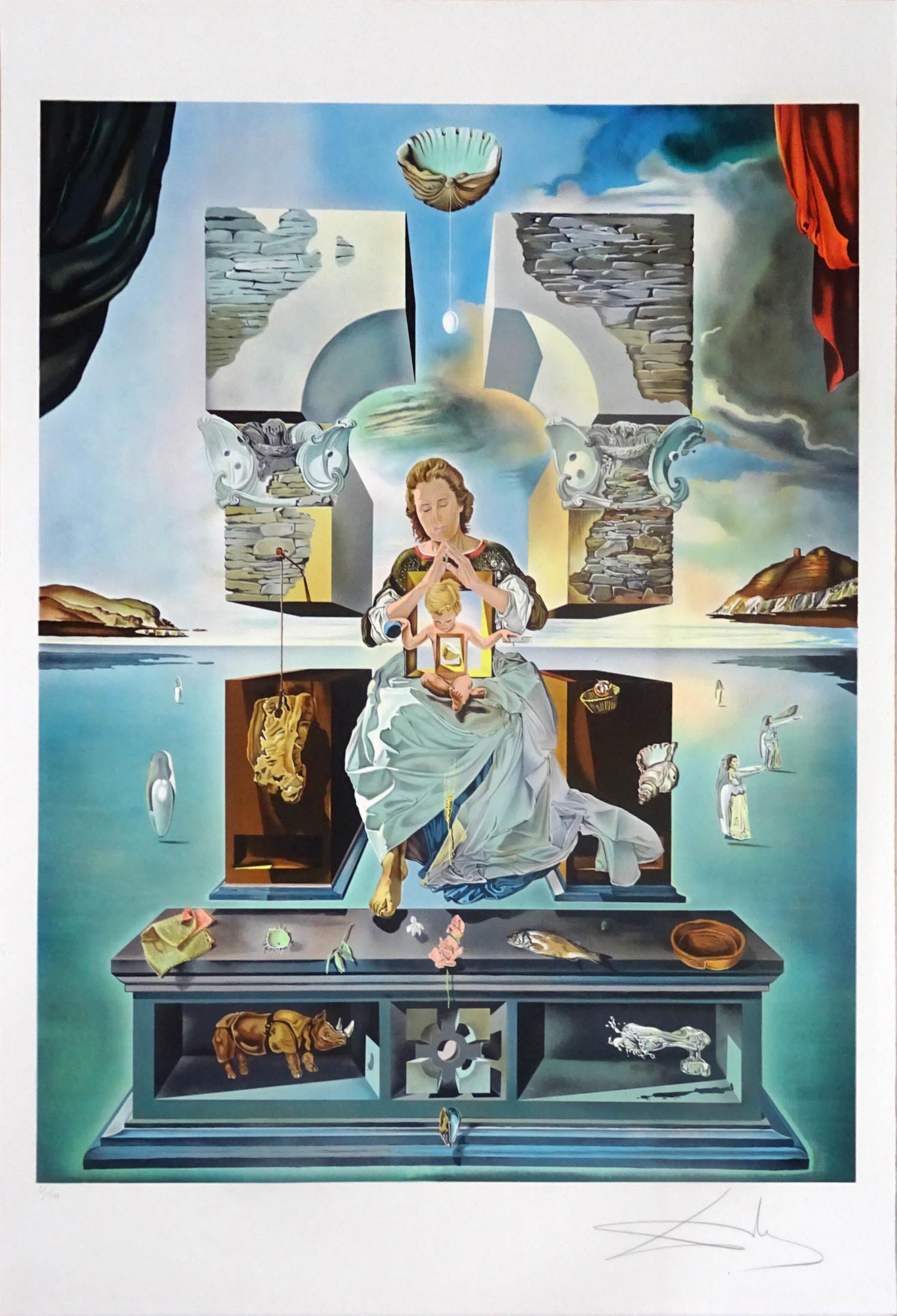
In Dalí’s canvases, Gala appears time and again. Her image multiplies in levitating figures, in mystical scenes, in sublime faces and idealized bodies. In works such as "Galatea of the Spheres", "Leda Atomica", or "The Madonna of Port Lligat", Gala is not only a model but a symbol of purity, eternity, and perfection. Dalí even signed some of his works as “Gala-Salvador Dalí”, in an unprecedented act of artistic and loving fusion.
But it was not all harmony. Gala was also a controversial, enigmatic figure, often feared by the artist’s close circle. She maintained extramarital relationships with Dalí’s consent, and even fascination, as he found in those episodes a way to sublimate his desire. Their marriage was a precarious balance of devotion, jealousy, admiration, and freedom. Even so, their bond withstood the passage of time, the criticism of the art world, and the emotional turbulence of both.
Gala died in 1982, and Dalí, who had loved her with an almost pathological intensity, never truly recovered. He withdrew to the Castle of Púbol —a gift he had given Gala and where he could only enter with her written permission— and slowly faded away, as if his creative fire depended on her. His last wish was to rest eternally close to her, united beyond death.
The love story of Salvador Dalí and Gala transcends the romantic myth. It was a profound symbiosis between delirium and order, between unbridled genius and strategic intelligence. Gala was far more than his muse: she was the axis upon which his entire universe turned. And Dalí, more than an artist in love, was a man who found in love the driving force of his brightest madness.