
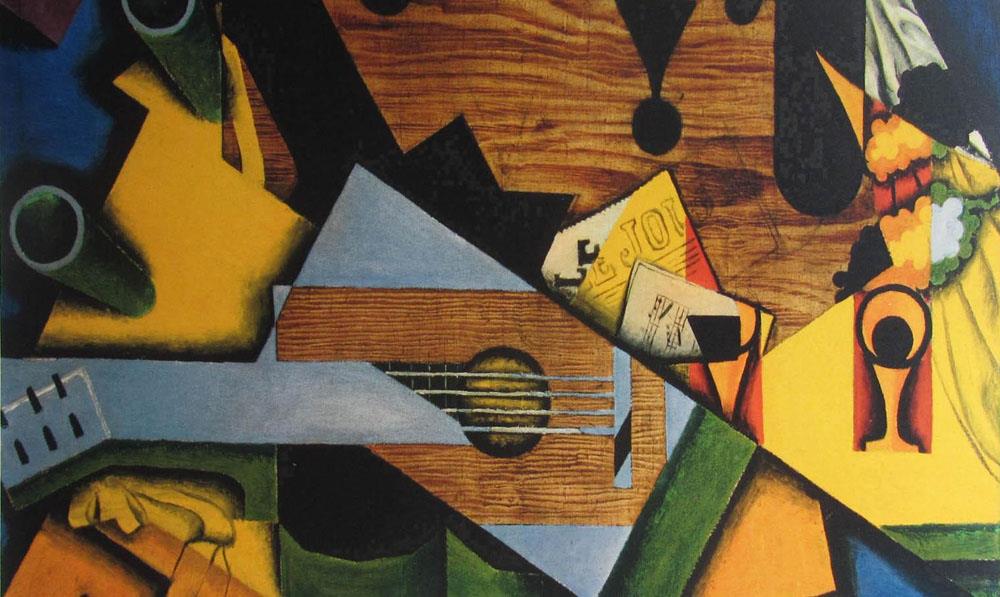
Juan Gris: The brevity of a life and the greatness of a work
Juan GrisIn the mind of any painting lover, the word "cubism" evokes the name of Juan Gris, just as that name evokes a multitude of images sprung from the brush and materials of this great artist, born on March 23, 1887. It seems as if the pictorial trend had germinated in the figurative core, not of José Victoriano González-Pérez (the man) but of Juan Gris (the artist, the painter, the creator).
His life lasted only 40 years, as he passed away on May 11, 1927, in France due to a health already deteriorated by bronchitis and severe asthma attacks. He had little time to enrich the pictorial heritage with the plasticity of an eminently suggestive body of work.
Selling the paintings or reproductions of such a unique painter in any art auction house or online art auction must be a real pleasure. On the other hand, his works are reproduced using current techniques. Other painters like Dalí , Miró or Tàpies have also experimented with them. There is nothing as gratifying as buying and selling paintings, sculptures, graphic work, serigraphy, engraving, or lithography by one of the greats.
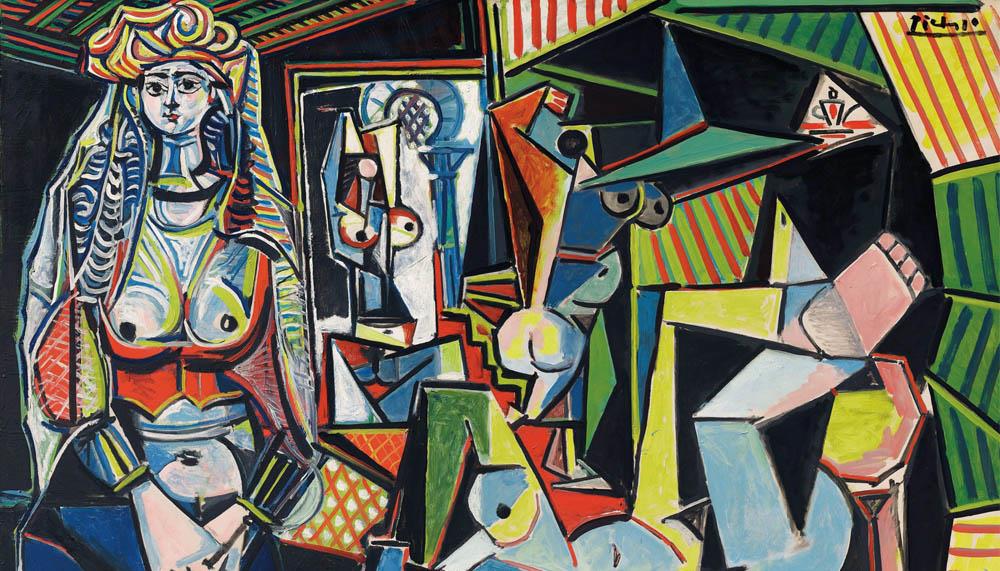
And one of the greats was Picasso, whom Juan Gris also knew, lived with, and even painted a portrait of. Their meeting took place, precisely, in their shared passion for the pictorial trend called cubism. After a few years, both their lives and their artistic styles diverged; Picasso evolved towards other artistic paths, while Juan Gris remained faithful to his own interpretation of reality. In Paris, he not only met Picasso but also the painters Georges Braque, Amedeo Modigliani, and Fernand Léger; the poets Guillaume Apollinaire, Max Jacob, and Pierre Reverdy; the art critic Maurice Raynal; as well as the patrons and dealers Gertrude Stein, Daniel-Henry Kahnweiler, and Clovis Sagot.
His first paintings depict still lifes and even some landscapes. In these compositions, a certain monochromy of ochres and grays predominates. One of his contributions to cubism was the development of the technique called "papier collé". He used it in the composition of his work "Glasses, Newspaper, and Wine Bottle", among others. This technique consists of pasting paper and cardboard cutouts onto a canvas, combining them with oil paint. In any case, he began by cultivating analytical cubism, later changing course towards a more philosophical, intellectual, and colorful synthetic cubism.
This latter phase represents the peak, the culmination of his work. In it, the idea of the represented object takes precedence over reality itself. He moves from the general to the particular, from the universal to the singular, until achieving the desired image. He is not content with results obtained by simply copying pieces or elements but sifts everything through a new interpretation and construction of the palpable. And he does so through the decomposition of space, contours, shadows, colors, light... But always starting from abstraction itself.
Some of his best-known works are "Still Life with Guitar", "The Checkered Tablecloth", "Still Life with a Sunblind", "Guitar and Pipe", "Still Life with a Bottle of Bordeaux", "Guitar and Mandolin", "Still Life with Guitar, Book, and Newspaper", "Still Life", "The Smoker", "Seated Woman", "Bottle and Fruit Bowl", "The Chessboard", and a long etcetera that would complete the masterful work of this Madrid-born artist who knew how to expand frontiers with a vast legacy worthy of appearing in the annals of art, painting, and cubism.
Signed, María Luisa Sánchez Vinader





Gracias a tus acertados comentarios y explicaciones, he podido entender mejor la obra de Juan Gris, pese a que el cubismo no es un estilo que comprendo. Gracias Marisa por ampliar mi conocimiento de los artistas y sus obras.
Otro grande cuyo merito fue el de quedarse en España en vez de ir a París, donde se cocinaba la gran revolución que supuso el cubismo. Sin duda fue, entre Braque, Picasso y él mismo, el cubista más limpio y puro de los tres, con una ejecución soberbia de sus polifocales formas y composiciones.