The Two Souls of Joaquim Mir: From Colorful Fire to the Intimate Line of Engraving
Joaquim Mir i Trinxet Postimpresionismo Arte modernoWhen we think of Joaquim Mir i Trinxet (Barcelona, 1873-1940), our minds are flooded with light and color. We remember him as the painter who took the Catalan landscape to an almost mystical dimension, a bold post-impressionist who broke down light into vibrant patches of pure color. Mir is, in his own right, one of the key names of Modernisme and one of the most important landscape painters in the history of Spanish art.
However, to reduce Mir to his facet as a colorist would be to overlook the complexity of his genius. Today we have the privilege of exploring a much lesser-known but immensely revealing facet of his work: his graphic art. Through a set of rare engravings and a magnificent oil painting from his mature period, we will delve into the two souls of this exceptional artist: the master of structure and line, and the poet of overflowing color.
The Master's Mark: The Mature Engravings (c. 1928-1930)
Far from being a youthful experiment, Mir's foray into engraving was a conscious exploration by an artist in full possession of his faculties. Around 1928-1930, Mir produced a very rare series of etchings. By shedding his explosive palette, the artist confronted the pillars of art—line, form, light, and shadow—revealing the solid scaffolding that supports his most famous paintings.
An Introspective and Symbolic Portrait

Among the engravings we are analyzing, this is undoubtedly the most striking and atypical. A memento mori, a skull treated with dramatic chiaroscuro and a web of dense, nervous lines. This type of work, which evokes the Spanish vanitas tradition of Valdés Leal or Goya, contrasts sharply with his vitalist landscapes. It shows us a profound, reflective Mir, perhaps meditating on mortality. It is a powerful reminder that beneath the painter of Mediterranean joy, there was an artist conscious of the shadows of existence.
The Draftsman-Landscapist: Structure and Atmosphere
The other engravings in this selection return us to his favorite theme, but from a completely new perspective.
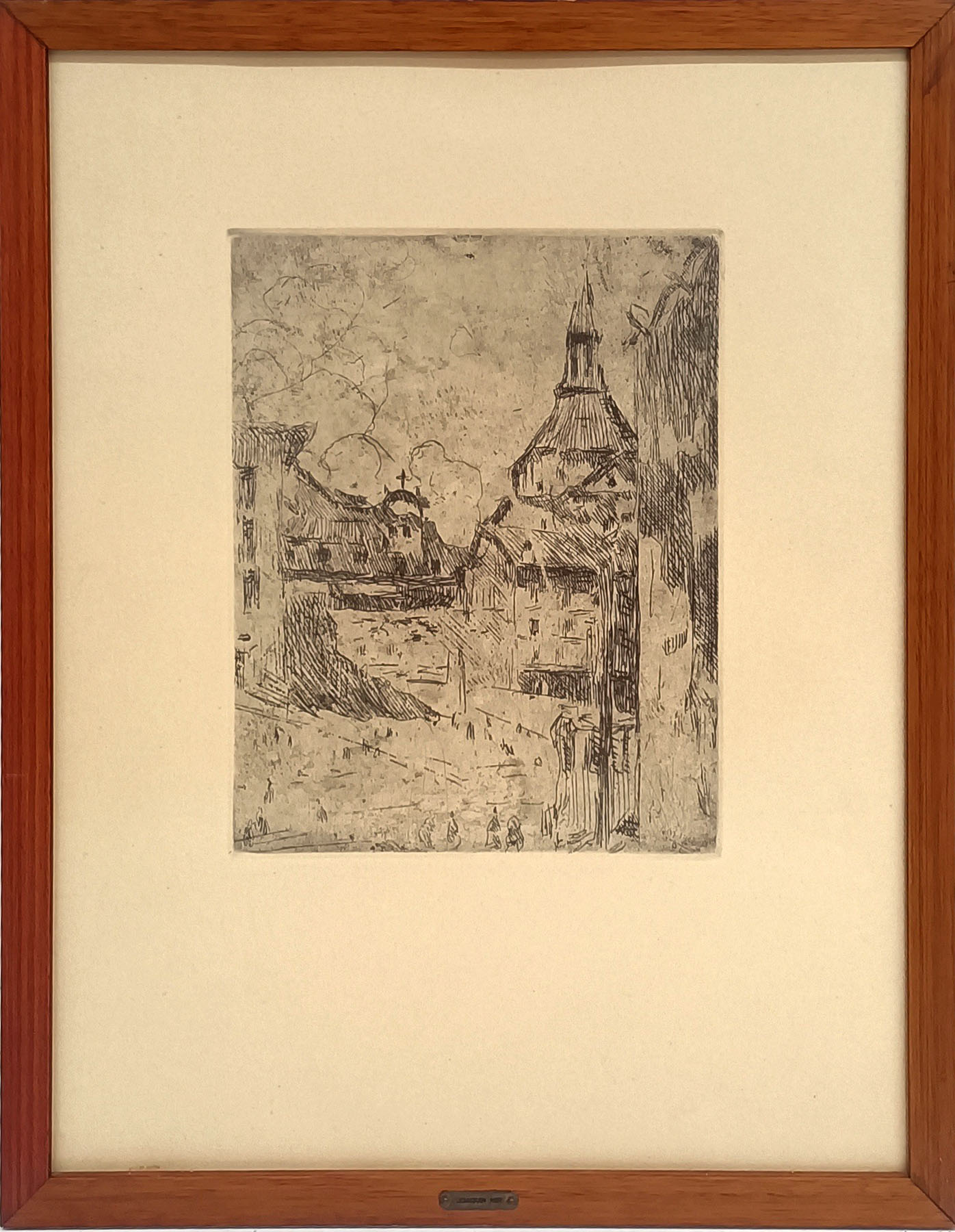
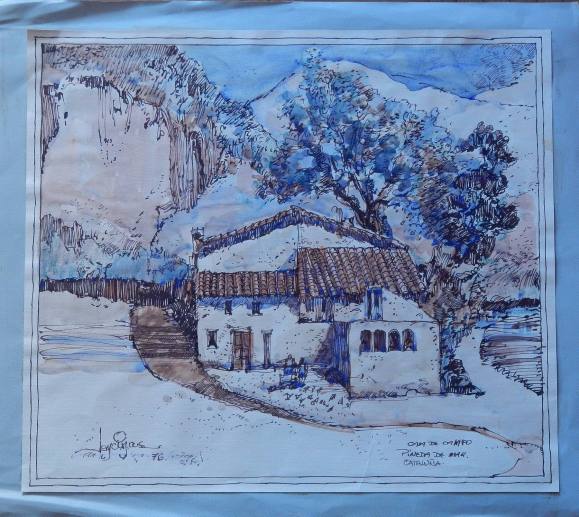
In this Village Landscape, we immediately recognize his interest in popular architecture and daily life. However, the absence of color forces the viewer to focus on the composition, on the play of volumes of the buildings, and on the spontaneity of a line that captures the essence of the scene with a masterful economy of means.
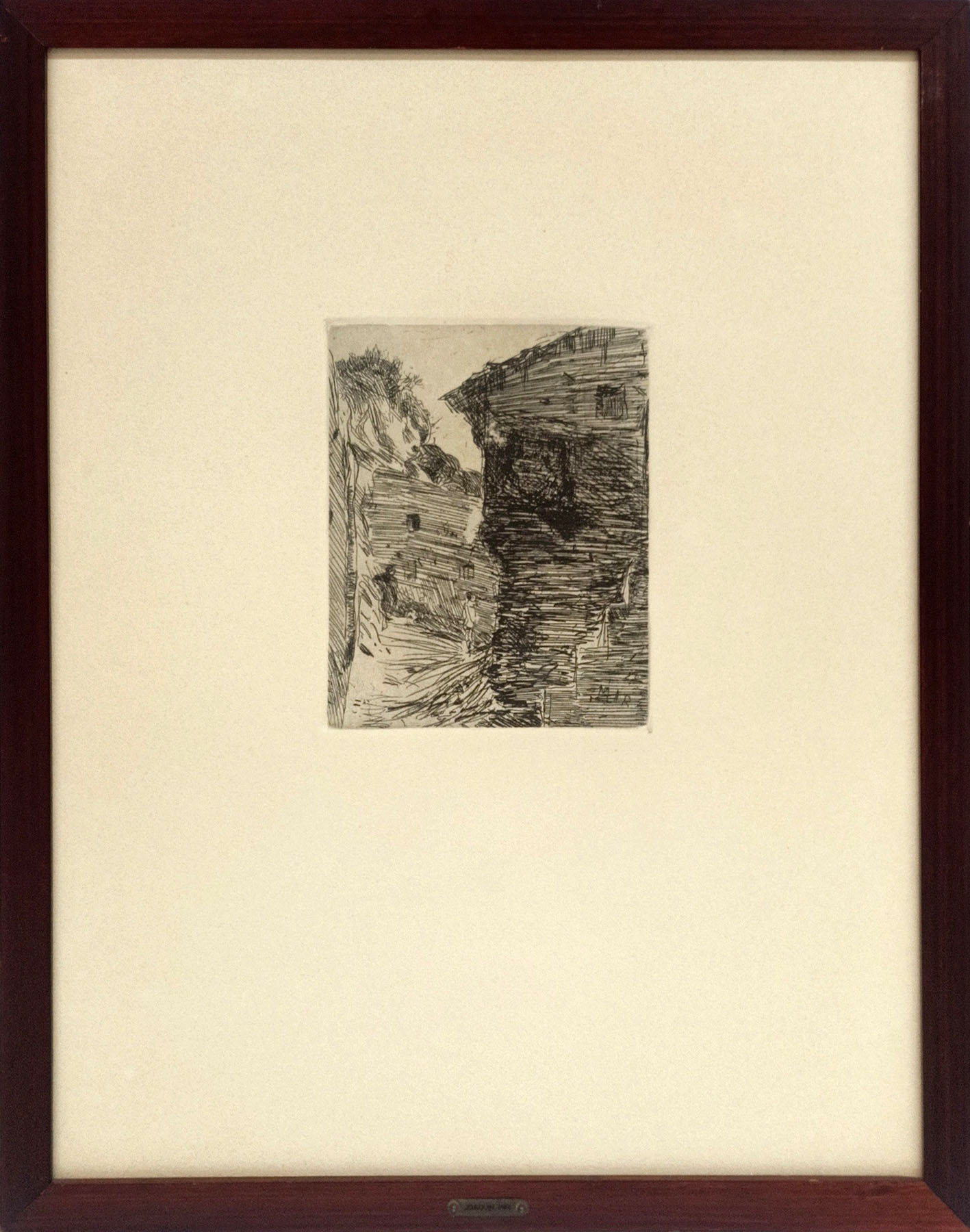
This other piece, with its overwhelming compositional force, encloses us between high walls, be it a narrow alley or a gorge. The verticality and aggressiveness of the lines convey a sense of drama and monumentality. It is the work of a superb draftsman, who finds the fundamental structure of nature.
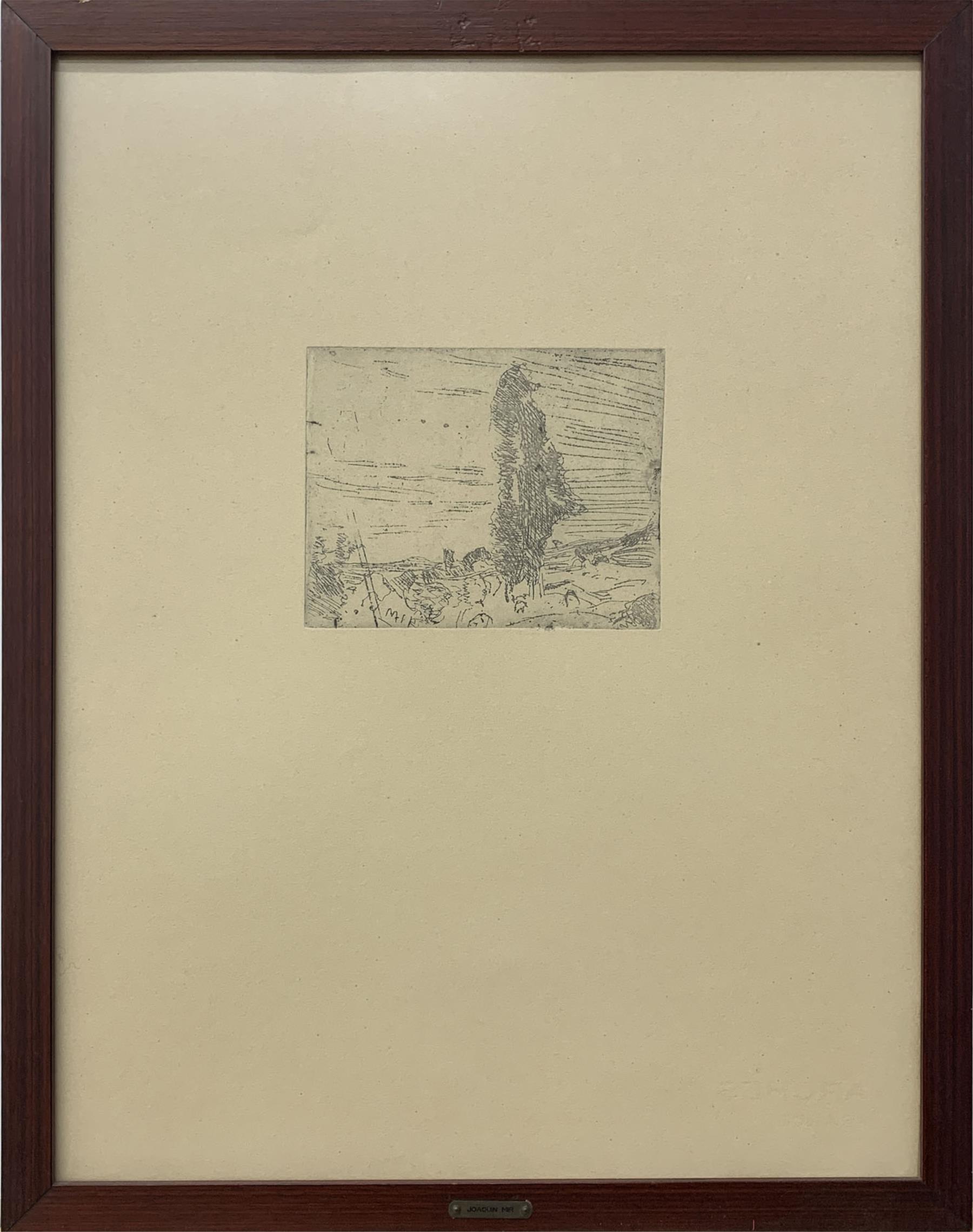
This last engraving is an exercise in atmospheric synthesis. The horizontal lines of the sky suggest immensity and wind, while the tree, treated with an almost calligraphic gesture, stands as the solitary protagonist of the landscape.
These engravings show that Mir's famous "stainism" (manchismo) was not the result of chance, but was based on a deep knowledge of drawing and composition.
The Flame of Color: "Miravet, the Ebro" (Oil on canvas, 45x38 cm)

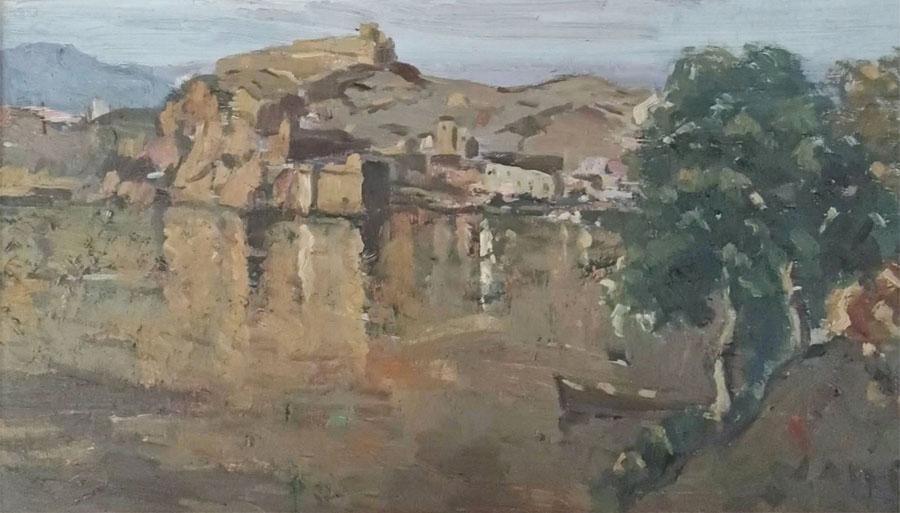
Miravet, the Ebro, c. 1927-1930
If the engravings show us the skeleton of his art, this oil on canvas is the flesh, blood, and soul. The work places us in Miravet, an enclave on the Ebro River that fascinated the painter and to which he dedicated one of his most celebrated and fruitful campaigns between 1929 and 1930.
This is no ordinary landscape. A work from this same series, "Fantasia del Ebro II," earned Mir the coveted Medal of Honor at the National Exhibition of Fine Arts in Madrid in 1930, the definitive recognition of his career. The painting we are observing, in a more intimate format (45x38 cm), is a perfect capsule of that triumphant vision.
Here we see the Mir we all know. The earth and the architecture of the town are built with dense, material brushstrokes, in a palette of ochres, earths, and siennas that seem to be extracted directly from the landscape. The sky, on the other hand, is more fluid, with blues, grays, and whites that capture the changing light of the Ebro lands. The composition, with that mountainous profile dominating the scene, is undeniably solid, but the energy of the brushwork fills it with a vibrant dynamism. It is nature not only seen, but felt and lived by the artist.
Conclusion: One Genius, Two Languages
The joint contemplation of these engravings and this painting offers us a richer and more complete understanding of Joaquim Mir i Trinxet. They are not two opposing artists, but two sides of the same brilliant coin.
The engravings reveal the disciplined draftsman, the master of form who commands the line to express both monumental structure and the deepest introspection. The oil painting presents us with the visionary colorist, the poet of Mediterranean light capable of transforming a landscape into an almost abstract sensory experience. Together, they demonstrate the magnitude of an artist who, beyond the explosion of color, was a total master of the image.