
Secrets of Salvador Dalí: Gala, an artist without a work
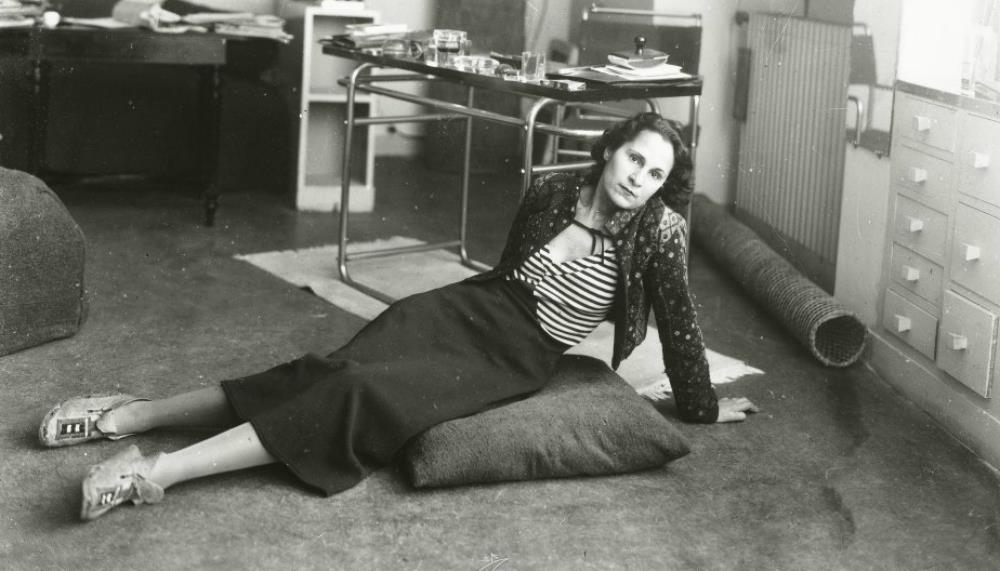
Personajes famosos Dalí Surrealismo Arte PinturaGala, the inaccessible, the inspiring, the lover, the talent scout, the calculating. A thousand and one adjectives could serve to explain the role of this woman in the art scene of the early twentieth century, but not all of them together could manage an outline that would allow her to be portrayed. As loved as she was hated, Gala is a complex character, a mystery that upset the art world with her mere presence.
 Gala, her role as Salvador Dalí's muse
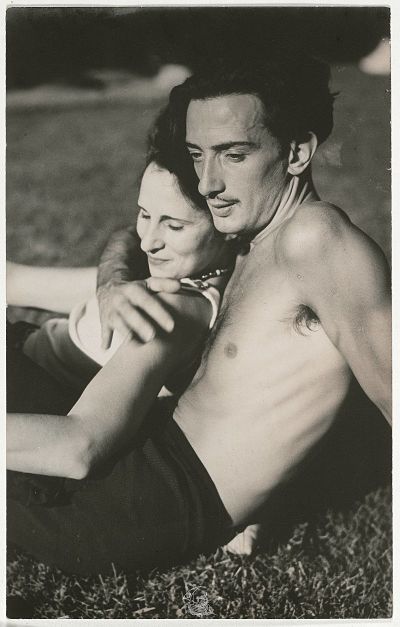
Gala has gone down in history as the muse of the painter Salvador Dalí, as a woman of great artistic intuition who managed to fully exploit the talent of the Surrealist genius. However, this is not the first relationship Gala had with an artist. In fact, they met when Gala traveled to Catalonia with her daughter, accompanying her husband, the French poet Paul Éluard, whom Dalí had invited to spend the summer at his home during their meeting at the Paris premiere of the film Un Chien Andalou.
During those vacations that the group enjoyed in the Catalan town, Gala made a deep impression on Dalí, and their lives were linked forever from that moment. This was not prevented by the disapproval of the painter's father, who, like a good part of society, criticized the transgressive spirit of the avant-garde, nor by Dalí's subsequent expulsion from the Surrealist group due to disagreements with André Breton; Dalí had been captivated by Gala, and he expressed this in his autobiography The Secret Life of Salvador Dalí (1941):
She was destined to be my Gradiva, “the one who advances,” my wife. But, for that, she had to cure me, and she cured me!
Gala is a model and inspiration for Dalí, a muse who opens him up to new realities and experiences, who puts order to the thoughts chaotically accumulating in his mind, and who accompanies him day by day. She is the sustenance of his creation and his very life. Following the painter's autobiographical testimony:
She discovers and brings me all the essences that turn into the honey of my thought in the busy hive of my brain (...), she brings me the rare magic book that should nourish my magic (...) and she accompanies me during the long sessions of my painting, producing a murmur like a skin bell, thanks to which I learn all the things that, without her, I would never come to know.
Gala, artist without a work
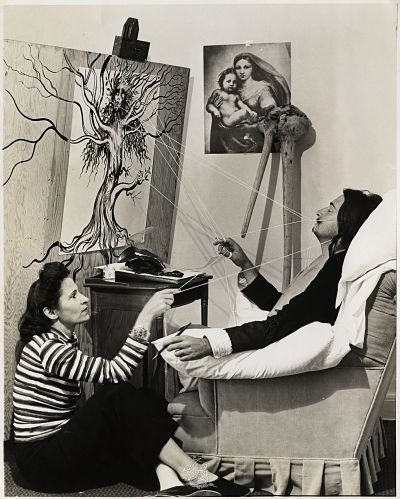
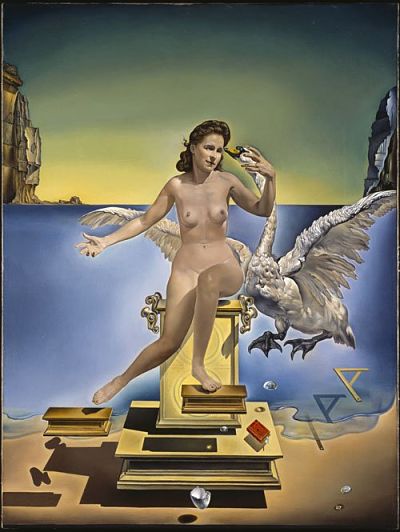 The deep imprint of Gala can be seen in Dalí's autobiographical writings, not only on Dalí the man, but also on Dalí the painter, whom she assists as a model or inspiration, a fact attested by works such as Leda Atomica (1949); and also by taking an active part in the artist's professional career, by carrying out tasks as an editor, manager, or art dealer.
We thus find a cultured, well-connected, tenacious, and capable woman, a dedicated collaborator of someone else's talent whom she was able to convert, with her intervention, into a genuine joint creation: an artist without a work, mother of the surrealist ultimate, of the pure idea; author of an ephemeral work that she was able to make tangible thanks to the hands of another.
Biography of Gala Dalí
Of the years before her arrival in the Parisian circles, we know little about Gala's life.
Born in Kazan (Russia) in 1894, her real name is Helena Ivanovna Diakonova. Her father died when she was eleven years old, and her mother remarried a liberal lawyer from Moscow, with whom the girl established a good relationship, and who was in charge of providing her with a good education.
 The young woman was an outstanding student, and she obtained a scholarship by decree of the Tsar that qualified her to teach primary school and give lessons at home, although her early teaching career would be truncated by tuberculosis that led her to be admitted to a sanatorium in Davos (Switzerland). It was during this stay at the Clavadel Sanatorium where she met the man who would be her first husband, the poet Paul Éluard, who was still known as Eugène Grindel at the time.
After two years in which they shared moments of reading, both were discharged from the sanatorium and their paths diverged: the outbreak of World War I took Éluard to the front, and Gala to her native Russia, although not without first promising to marry. In 1917, despite the difficulties caused by the war, Gala moved to Paris, where they married and their only daughter Cécile was born.
During their years as a married couple, they attended Parisian art gatherings together, where Gala came into contact with the standard-bearers of the pictorial avant-garde, such as André Breton or Max Ernst, who defined her as "the embodiment of woman."
In 1929 she met Salvador Dalí and their lives intertwined forever. They went to live together in a fisherman's hut in Portlligat. They would expand the property to build the current structure, today the Salvador Dalí House-Museum in Portlligat.
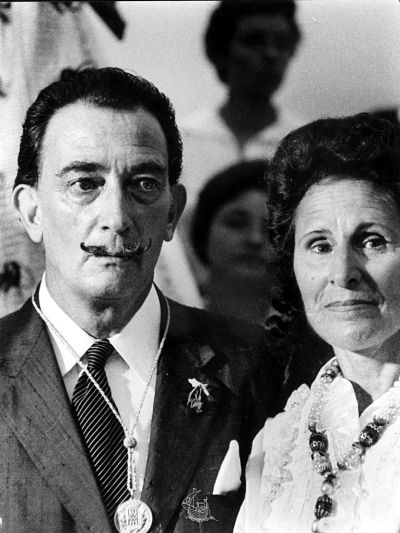 Subsequently, World War II led the couple to flee to the United States, where they resided for eight years. They returned to Spain at the end of the decade and married in 1959 in the sanctuary of Els Àngels, near Girona.
Ten years after their marriage, Dalí bought the Castle of Púbol for Gala, where the woman spent some seasons and the place where she was buried after her death in 1982. .
Gala's life is a mirage, a reality intertwined with the memories of the Surrealist genius and only embalmed for memory in his autobiographical writings. A secret code, an unresolved mystery, the philosopher's stone. Gala is, according to Dalí:
The one who has built all the success of my life.
What do you think? Do you think we would remember Salvador Dalí, the Surrealist genius, in the same way without Gala's intervention on the scene?
Images courtesy of the Gala - Salvador Dalí Foundation





Por supuesto que sí ,GALA no se cruza en la vida de DALÍ, no hubiese tenido ni la mitad de la mitad del auge que Dalí llegó a conseguir
Gala el motor interno de un controvertido pintor que llevó el arte a la estratosfera.